Coworker on an Office CardShort
14w · 68cTwo lines on a card going round
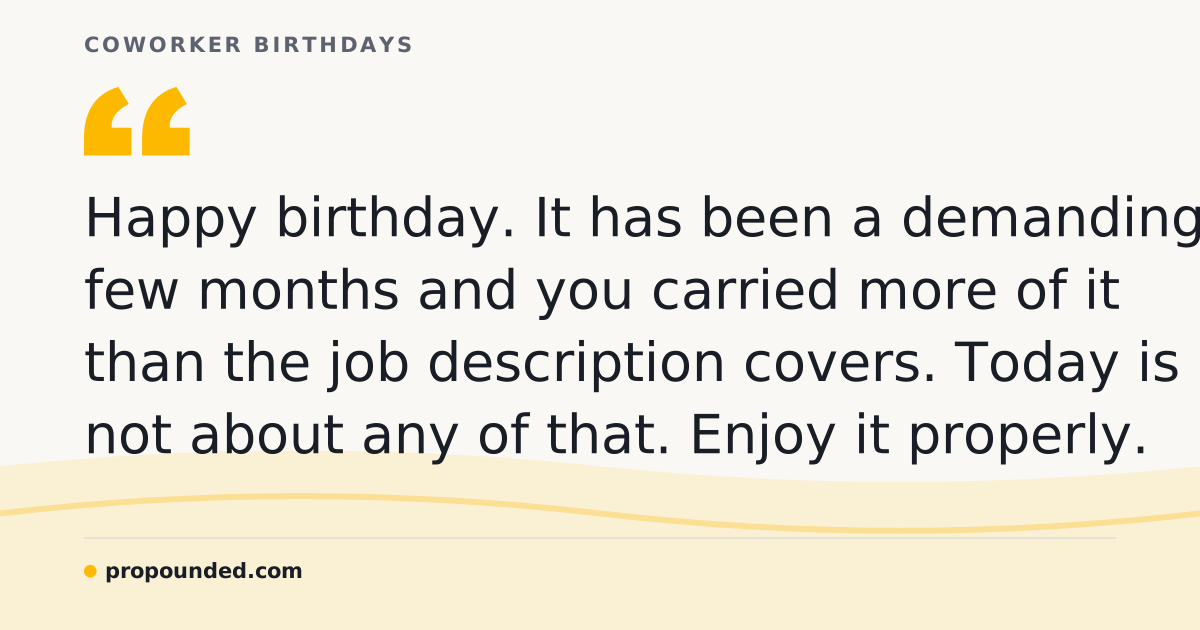
“Happy birthday. Hope the day is a good one and the meetings are few.”
Best for: Short birthday wishes for a coworker when the card is being passed around the office.

A card is going round the office and you have about ninety seconds and three lines of space. That is the whole problem with a coworker birthday message, and it is a genuinely awkward one: this is a personal occasion happening in a professional setting, for someone you may like a great deal and know almost nothing about.
The calibration is narrower than it looks. Too warm and it reads as forced intimacy from someone who has never seen them outside the building. Too formal and it reads as an obligation discharged, which is worse on a birthday than on almost any other occasion, because the whole point of the card is that somebody noticed. What works sits in between: friendly, specific where you can be, and short enough that the twelve people signing after you still have room.
Two things decide most of it. The first is where the message is going — a physical card that gets passed desk to desk takes two lines, a team channel post takes one, and a note from a manager can take four. The second is how well you actually know them, which decides whether you can reference anything at all beyond the day itself.
The messages below are grouped by who is receiving them and filterable by tone and length. Every one shows its word count, so you can pick something that fits the space rather than discovering halfway through a card that it does not.
Archive started 22 August 2026 · last updated 22 August 2026
Recipients with at least 8 messages have a dedicated page.
No matching messages found
Try clearing your search, or selecting “All Tones”.
Four questions that decide most of it. Each answer leads somewhere specific.
Take something under 25 words. Not because brevity is safer, but because the card is a shared surface and using four lines of it is a small act of rudeness to whoever signs next.
Short birthday wishes for coworkers →Reference something real — the coffee run, the project they carried, the thing they always say in stand-up. Specificity is what separates a card someone keeps from one they recycle.
Heartfelt birthday wishes for coworkers →A birthday is one of the few chances to say something appreciative that is not tied to performance. Take it, but keep it about them rather than their output.
Birthday Wishes for Coworkers for Direct Reports →Say so implicitly by keeping it warm and general. A near-stranger writing something specific is worse than a near-stranger writing something brief and sincere.
Short birthday wishes for coworkers →One line, posted where forty people will see it. The audience is larger than a card and the tone should be a shade more public than what you would write privately.
Short birthday wishes for coworkers →Aim at the situation rather than at them, and never at their age. Those two sound similar and land nowhere near each other in an office.
Funny birthday wishes for coworkers →Five habits that make an otherwise sincere note land badly, and what to write instead.
AvoidAnother year closer to retirement!
InsteadJoke about the office instead — the card that took three weeks to reach them, the fact that nobody knows how old anyone is. Age jokes are the standard coworker birthday joke and the one most likely to land badly, because you rarely know how somebody feels about the number.
AvoidHappy birthday! Hope you have a great day.
InsteadAdd one clause that could only be about them. "Happy birthday — the team runs better on the weeks you are in it" costs you four extra words and changes the whole message.
AvoidHappy birthday to my favourite person in this building!
InsteadMatch the warmth to the relationship. From someone they speak to twice a month, this reads as performance. "Happy birthday. Good to work with you." is smaller and true.
AvoidHappy birthday, and thanks for smashing your targets this quarter.
InsteadLeave the work out of it, or mention it once and lightly. A birthday is the one workplace occasion that is not about output, which is exactly what makes it worth marking.
AvoidFour lines of warm prose in the top-left corner.
InsteadTwo lines, placed considerately. A shared card is a shared surface, and length is the one variable everyone else has to live with.
The same news needs different wording on a card, in an all-team email, and in a direct message. Length is only part of it — so is who else sees it.
The most common case by a distance. Two lines, legible handwriting, and something that works whether they read it alone at their desk or aloud at the team lunch.
Public and permanent, so keep it clean and brief. One sentence, and no inside reference that forty people will have to interpret.
Carries more weight than it feels like it should. Say the appreciative thing you have been meaning to say, and keep it away from their performance.
Thirty, forty, fifty. The number is doing enough work on its own, so the message does not need to mention it. Warmth without arithmetic.
Acknowledge it in the first three words and move on. The apology should be shorter than the wish, or the card becomes about you.
A message rather than a card, and warmth from a distance reads as effort rather than as presumption. This is the one case where a near-stranger being kind is unambiguously good.